



 Edison Denisov’s “The Foam of Days”: A Soviet opera reimagined by Polish artists in Lille
To go or not to go? I was caught in two minds. On the one hand, The prospect of seeing a Polish creative team invited by the Opéra de Lille to revive Edison Denisov’s opera based on Boris Vian’s novel was tempting; yet I’ve never been a great admirer of contemporary works. In the end, the names of director Anna Smolar and music director Bassem Akiki convinced me to travel to France for the premiere.
There are no direct connections from Poland to Lille, so I chose to go via Paris, with a stopover in Vienna. I covered the final leg by train – finally getting the chance to ride the high-speed TGV. Tickets are checked before entering the platform, meaning only passengers with valid tickets can access the departure area.
The Paris–Brussels train arrived a few minutes early. To my disappointment, the train was quite old and noticeably dirty, its interior far from fresh. All carriages are open-plan: in first class, the seating is 2+1, and in second, 2+2. There are power outlets at the seats, and the Wi-Fi works. The journey from Charles de Gaulle Airport to Lille takes just under an hour, meaning the train averages over 200 km/h, occasionally accelerating to 320 km/h.
I arrived in Lille on time. The moments when the train surged to immense speed within seconds were impressive – you could really feel the technological power of the TGV. Otherwise, the travel standard was rather average, far below that of the Japanese shinkansen.
The Opéra de Lille is one of the most beautiful theatre buildings in France and one of the key cultural landmarks of the northern region of Hauts-de-France. The building was constructed after the previous theatre burned down in 1903. The city held an architectural competition, won by Louis-Marie Cordonnier – a renowned Lille architect responsible for many representative neo-Flemish buildings. Construction began in 1907 and was completed in 1913. The edifice, designed in an eclectic and neoclassical style, features a façade inspired by Paris’s Opéra Garnier, adorned with rich sculptures and allegories of music, poetry, and drama, crowned by winged Pegasi on the roof.
The grand opening of the opera was interrupted by the outbreak of World War I. During the German occupation, the building was seized, partially damaged, and its furnishings looted. The opera could welcome audiences again only on October 7, 1923, after several years of restoration. Its interior reflects the belle époque and neo-baroque aesthetics – marble columns, gilding, ornate ceiling paintings and crystal chandeliers. The horseshoe-shaped auditorium seats about 1,100 people and remains one of the best-preserved Italian-style theatres from the early 20th century, offering excellent visibility from nearly every seat.
In the second half of the 20th century, the Opéra de Lille underwent numerous modernizations, but it was the major renovation of 1998–2003 that restored its full splendour. The façades and interiors were refurbished, acoustics improved, and state-of-the-art technical systems introduced. The grand reopening took place in 2004, when Lille was the European Capital of Culture. Since then, the repertoire has included both classical works by Mozart, Verdi, and Puccini, and contemporary productions and interdisciplinary projects.
The opera places great emphasis on education and accessibility, organizing workshops, open rehearsals, outdoor screenings, and artist talks – attracting both opera lovers and new audiences. Located at Place du Théâtre in the heart of the city, next to the Renaissance-style Vieille Bourse, it remains one of Lille’s most recognizable landmarks: not merely a performance venue, but a vibrant cultural hub where history, music, and architecture come together in harmony.
Edison Denisov’s “L’Écume des jours” (“The Foam of Days”), based on the iconic novel by French writer Boris Vian, is among the most extraordinary and rarely performed operas of the 20th century. Vian – a key figure of postwar French culture – was a writer, musician and engineer who fused literature, jazz and satire. His work, poised between absurdism and social critique, shaped the imagination of entire generations, even beyond France. Denisov, one of the leading composers of Russian modernism, was deeply fascinated by French culture – its literature, music, elegance and irony. In his score, Vian’s world – absurd, melancholic, full of fantasy and fragility – gains voice and substance. It is music where jazz lightness coexists with dramatic intensity, grotesque with lyricism, laughter with despair. Denisov’s work pays homage to the French imagination but also to his own roots – the monumental choral sound of Russian liturgy, echoing with the toll of church bells and shadowed by the impossible love of “Tristan and Isolde.”
Listening to this music, one could not escape the feeling of encountering something that exists between worlds – a single sound that is itself poetry, though rough-edged, torn, uncertain of itself and of the very music it creates. Much of the credit belongs to the orchestra and to Bassem Akiki, who approached Denisov’s score with extraordinary tenderness and an awareness of the contemporary listener. Under his baton, the work pulsed like a living organism – unpredictable, shifting, full of tension. The mixture of styles – from lyricism to dissonance, from jazz to dramatic climaxes – flowed seamlessly from one register to another, at times breaking off abruptly, at times erupting in unexpected musical contrasts. In Akiki’s interpretation, Denisov ceased to be a “difficult” composer; he became intimate, emotional, even delicate.
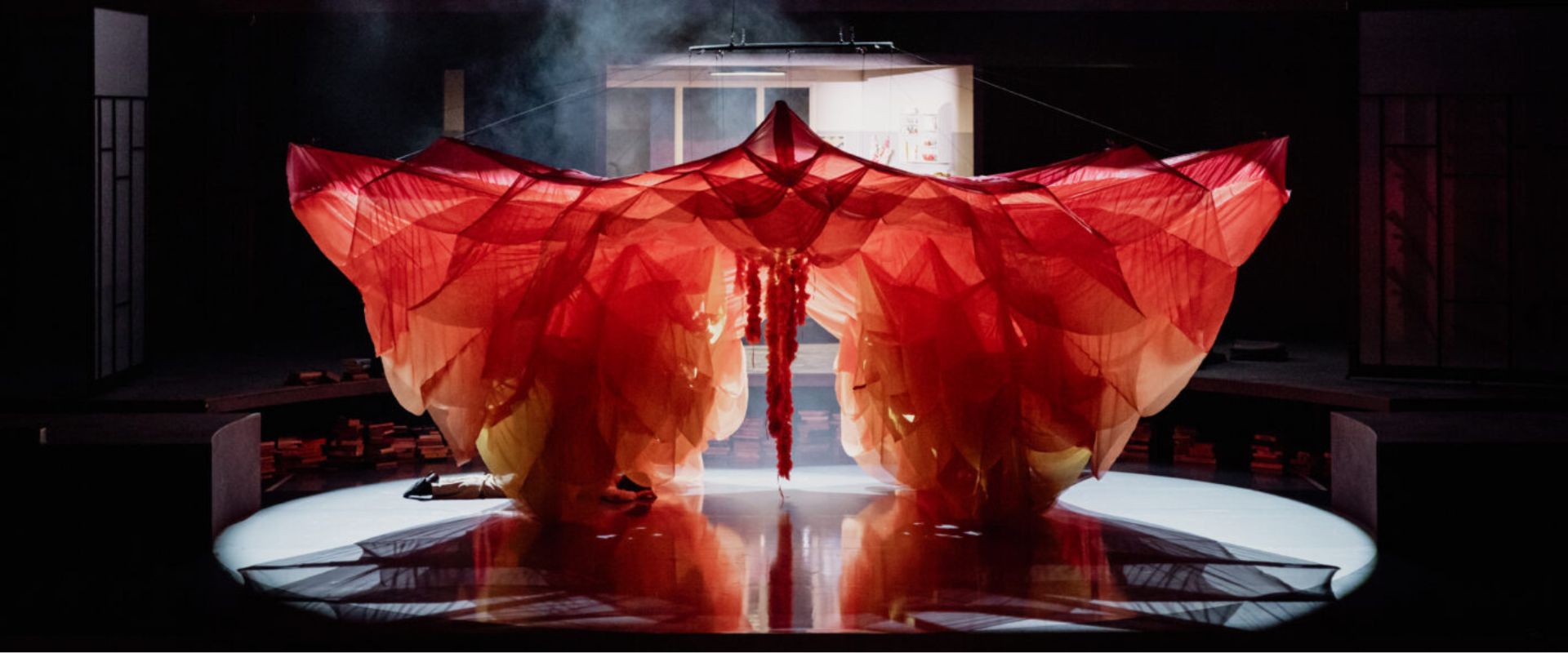
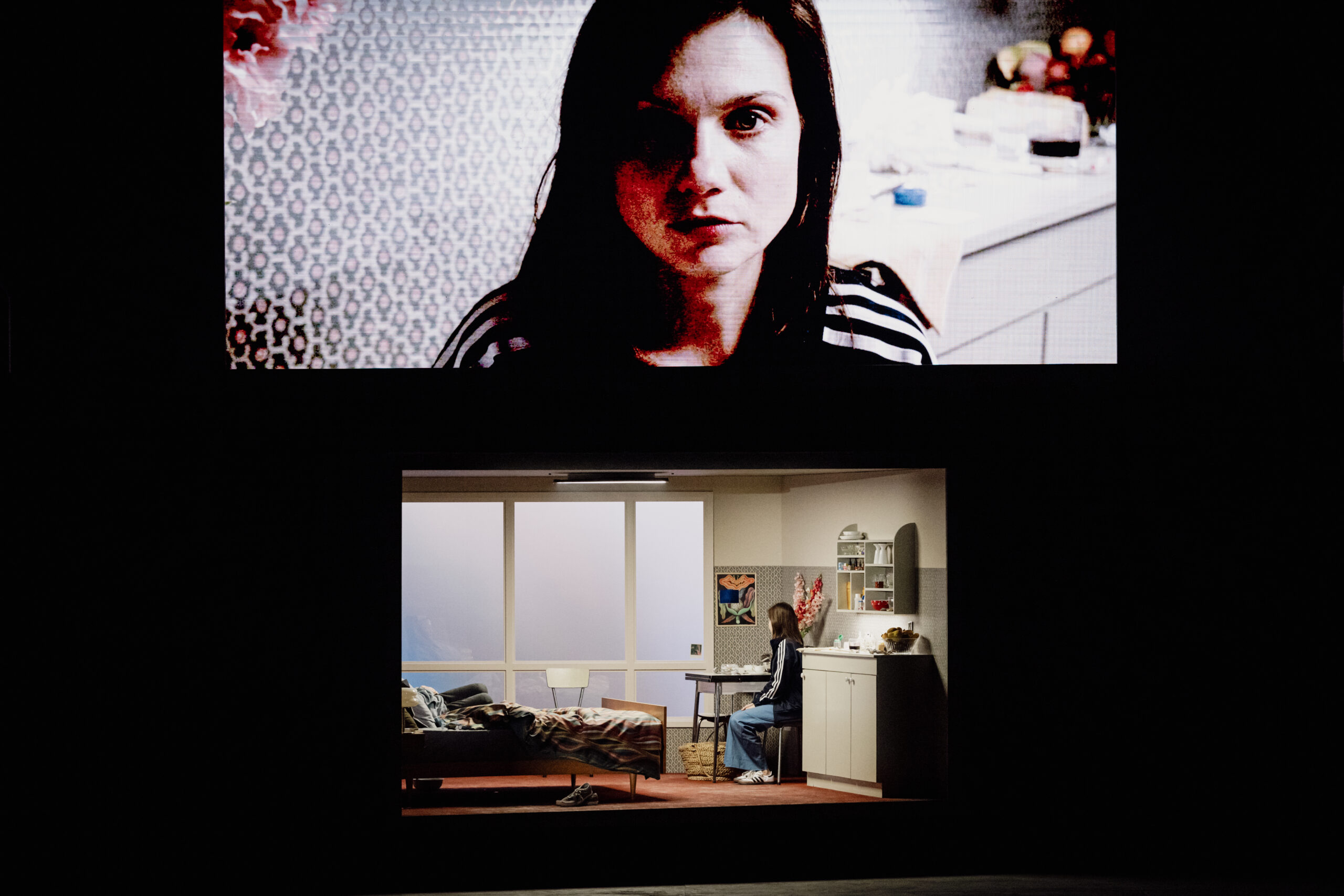
This intricate musical fabric was brought to the stage by acclaimed theatre artist Anna Smolar, for whom this was an operatic debut. Known for her deep attentiveness to human emotion, the director translated Vian’s poetic absurdity into the language of body, movement and light. Together with her artistic team – Anna Met (set design), Julia Kornacka (costumes), Felice Ross (lighting) and Paweł Sakowicz (choreography) – she created a production that doesn’t merely illustrate the music, but enters into dialogue with it. Her vision balances between realism and dream – a world where objects have their own will and love becomes an illness. Vian’s famous flower growing in the heroine’s lungs was stripped of its poetic charm and rendered as a tumour – a painful metaphor for decay, but also for the very mechanism of feeling, which can be both beautiful and destructive.
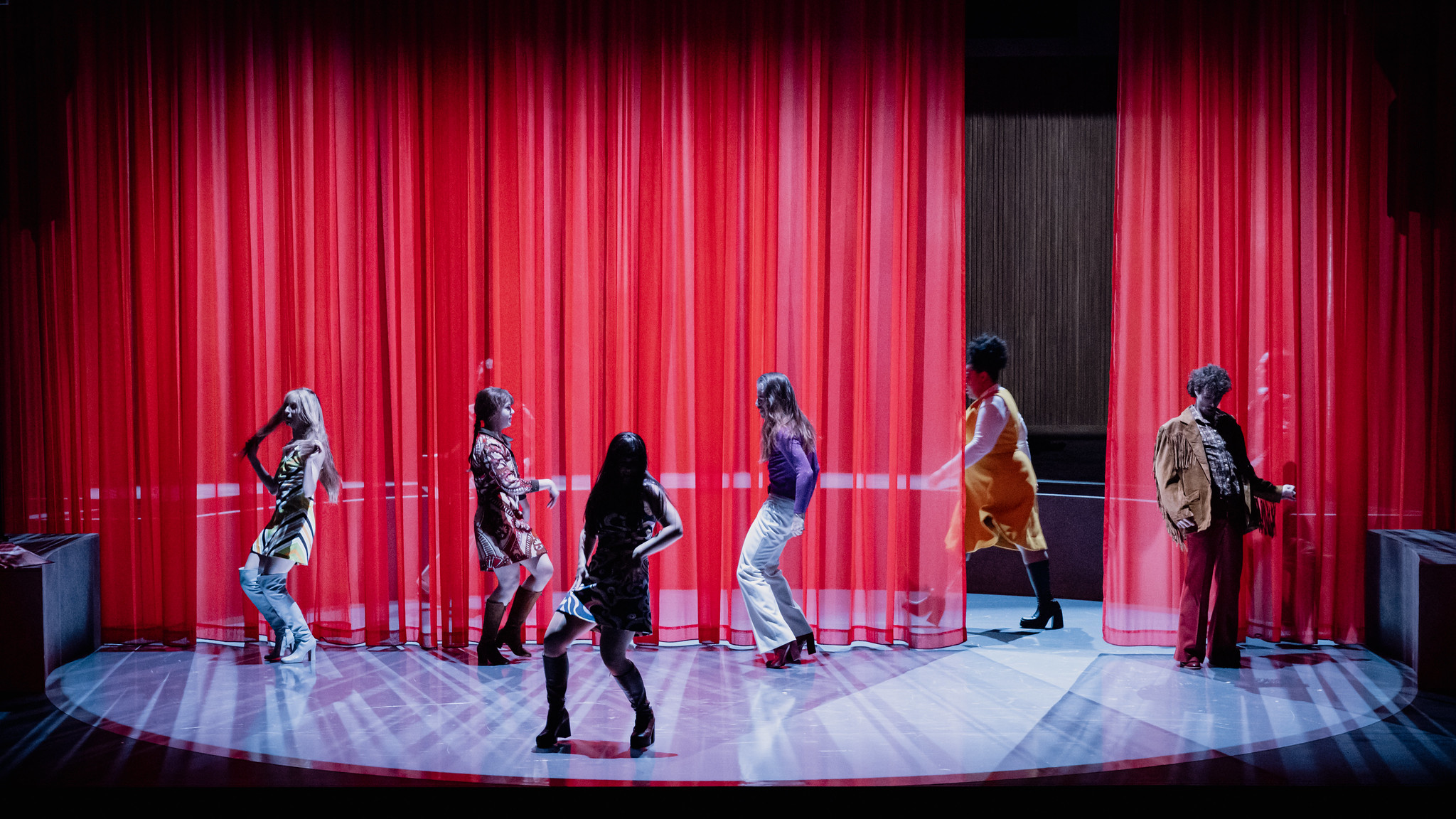
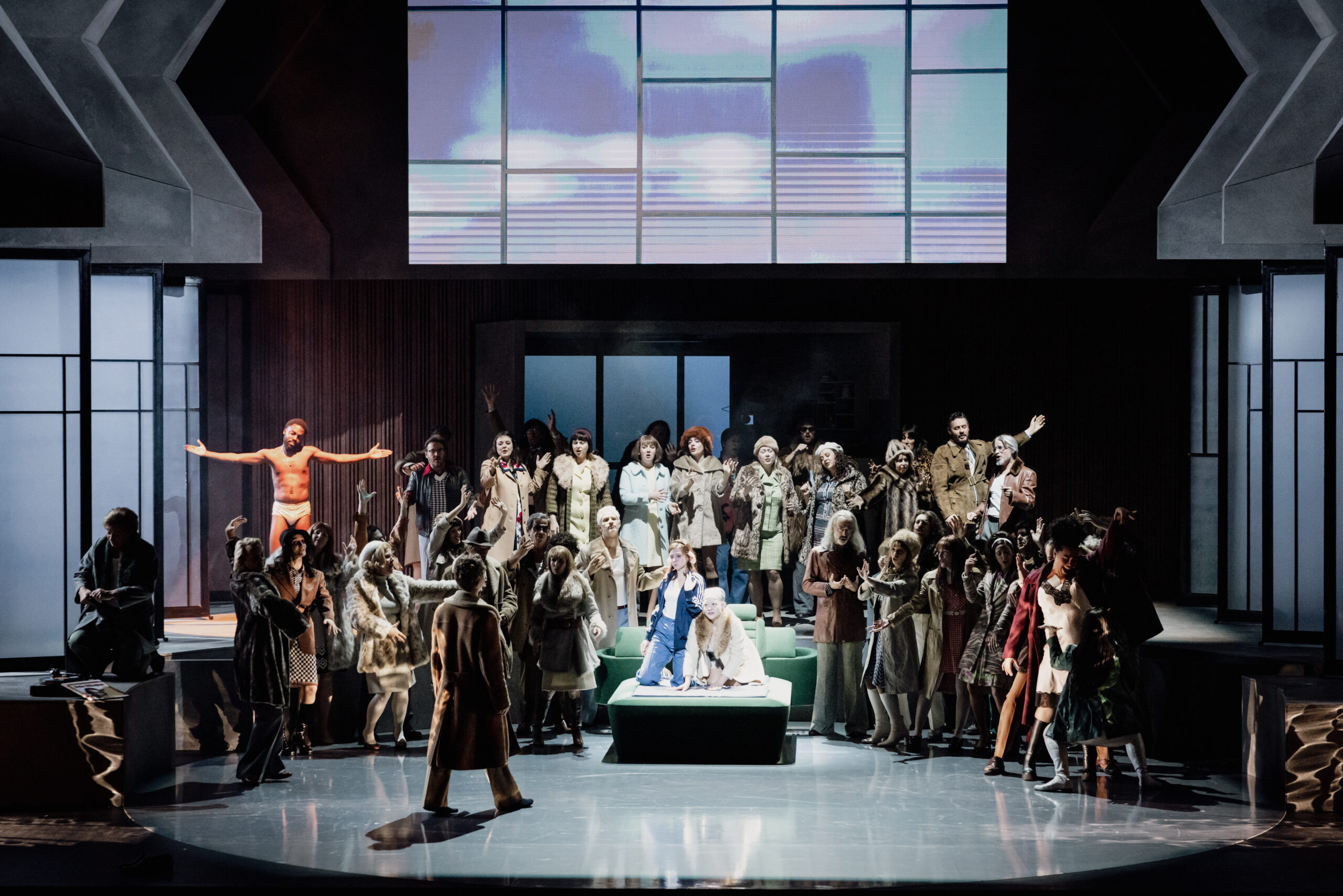
What Smolar achieved was not a simple adaptation, but a conversation with Denisov and Vian – an attempt to translate their worlds into the language of contemporary sensibility. Her theatre, rich and moving, allows the music to breathe. The scenes unfold like a dream that becomes increasingly real with each passing minute. Out of this ambiguity arises emotion – not sentimentality, but a melancholy born of the awareness that everything beautiful is also fragile and mortal. Smolar treated Denisov’s work not as an opera but as a dramatic spectacle. Together with the set designer, she constructed two parallel worlds on stage: the first, realistic one – a small mansion at the back of the stage, where every detail, from the apartment to the hospital, is recreated with meticulous precision; and the second – the circular arena at the front, where visions, dreams, and imaginings of the protagonists unfold. At times it becomes a restaurant, an ice rink, or the home of Chick (a compelling Elmar Gilbertsson), obsessed with fashionable philosophy. The illusionist interludes add further sparkle, enhancing the surreal character of the work. The sides of the stage are enclosed by transparent panels, while modernist structures pierce from the wings toward the stage like sharp teeth, especially in the second act, intensifying the claustrophobic frame of the story.
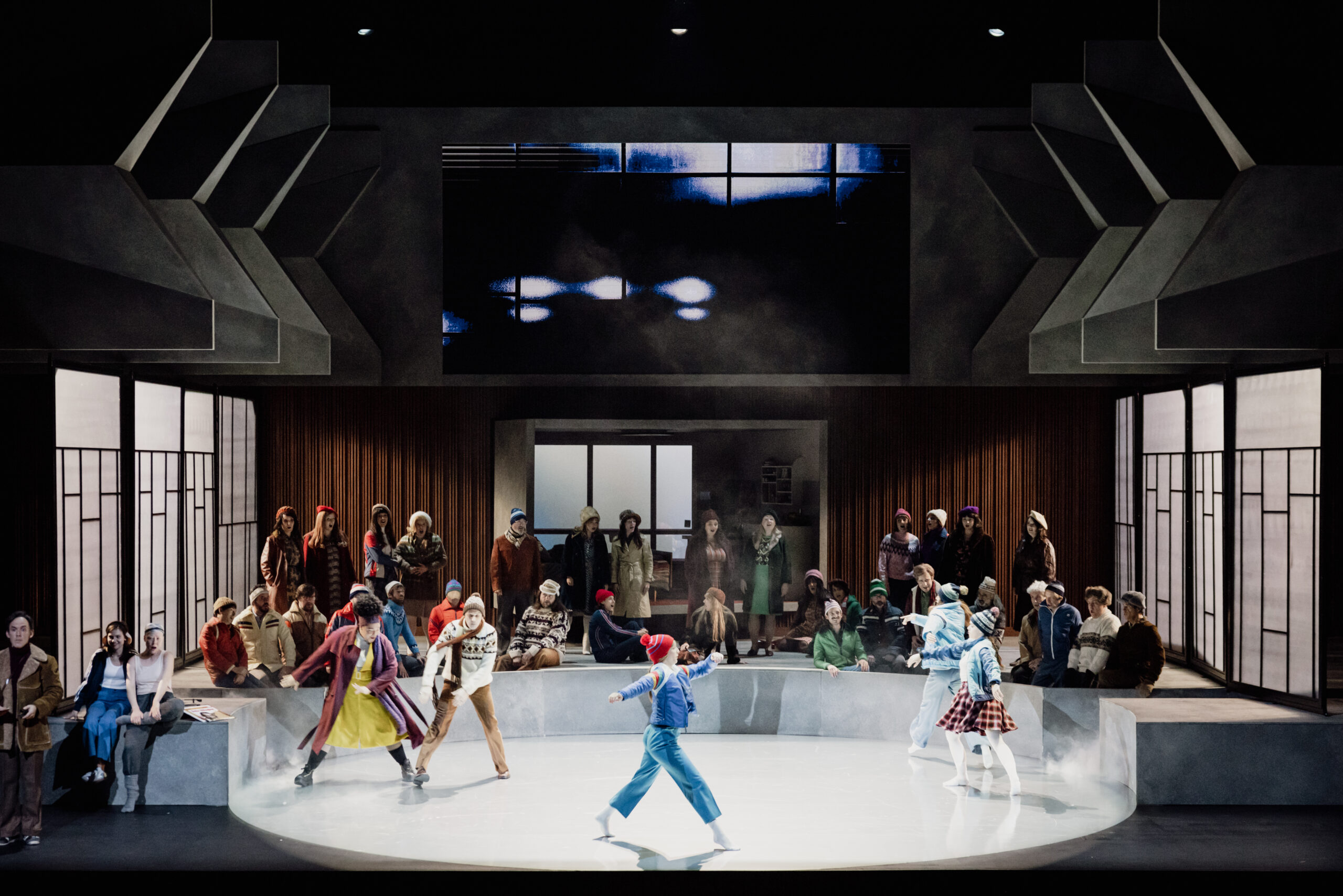
The soloists and choir of the Opéra de Lille created an evening of remarkable power and artistry. Cameron Becker (a bright, versatile tenor), Josefin Feiler (deeply moving) and Katia Ledoux (stately, with a richly coloured mezzo-soprano), together with the rest of the cast, imbued the music with emotional depth, skillfully blending acting and vocally demanding parts. Małgorzata Gorol, as the narrator, bound the entire performance into a story of love disintegrating along with the world itself. The dancers, gifted across a range of contemporary styles, complemented the narrative through movement – with choreography by Paweł Sakowicz full of nuance and sensitivity.
As I left the opera house, I realized this was more than a revival of a forgotten work – it was an event that reminded us of the true purpose of musical theatre: not to adorn reality, but to reinterpret it. Denisov and Vian, Smolar and Akiki met in a space where music and theatre ceased to be separate entities. In Lille, a moving spectacle was born – one that found harmony through the celebration of fracture. And in that fracture, in that tension between poetry and pain, the sound of bells still resonates.