



 The sound of opera in the philharmonic: three concerts, three tales at the National Forum of Music in Wrocław
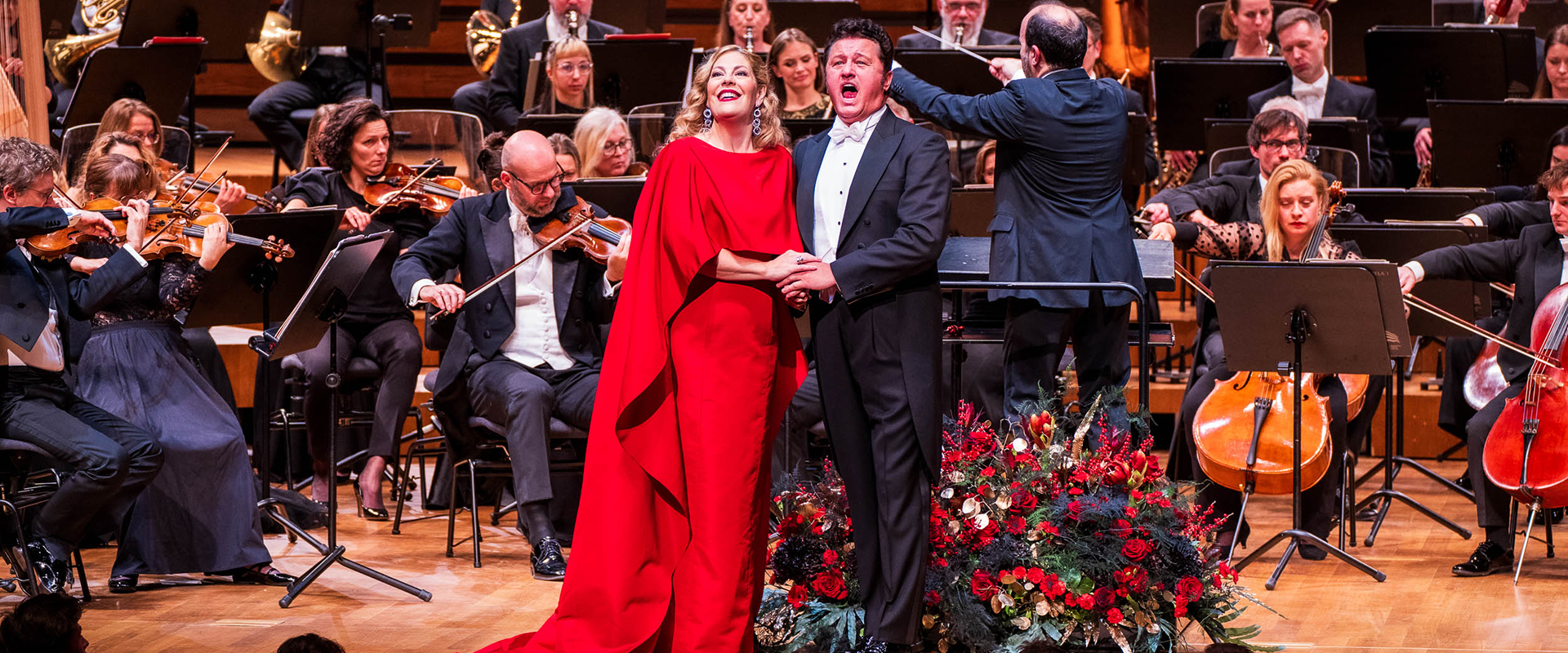
You don’t have to go to an opera house to experience opera at its best. Wrocław’s National Forum of Music (NFM) shows that a philharmonic hall can be just as perfect a place for unforgettable encounters with vocal artistry.
Few moments are as rare as sitting in a concert hall and feeling the world dissolve into silence — and that’s exactly how I feel every time I take my seat at the NFM. Once inside, the city, its noise, and its rush are left behind. It feels like stepping into another dimension. Engineers describe it as a “box within a box” – and indeed, that’s how it was constructed: a building within a building, a hall within a shell. The design was created by Kuryłowicz & Associates, winners of the 2005 international architectural competition. They conceived an elegant structure in which every line serves acoustics. Construction began in 2008, and after seven years – on September 4, 2015 – the Forum opened its doors to music and audiences.
Its main hall seats 1,804 listeners. With three balcony levels, an amphitheatre layout and a choir section behind the stage, every detail is designed to ensure optimal sound from every seat. Comfort has been thoughtfully engineered – cool air drifts quietly from vents beneath the seats, as if each listener had their own climate control. The building’s façade evokes the shape of a violin, while the wooden panels form a resonating soundboard. Inside the hall stands an organ with around 4,700 pipes – ranging from a few millimetres to over ten metres in length – producing tones from about 16 Hz to 18,000 Hz.
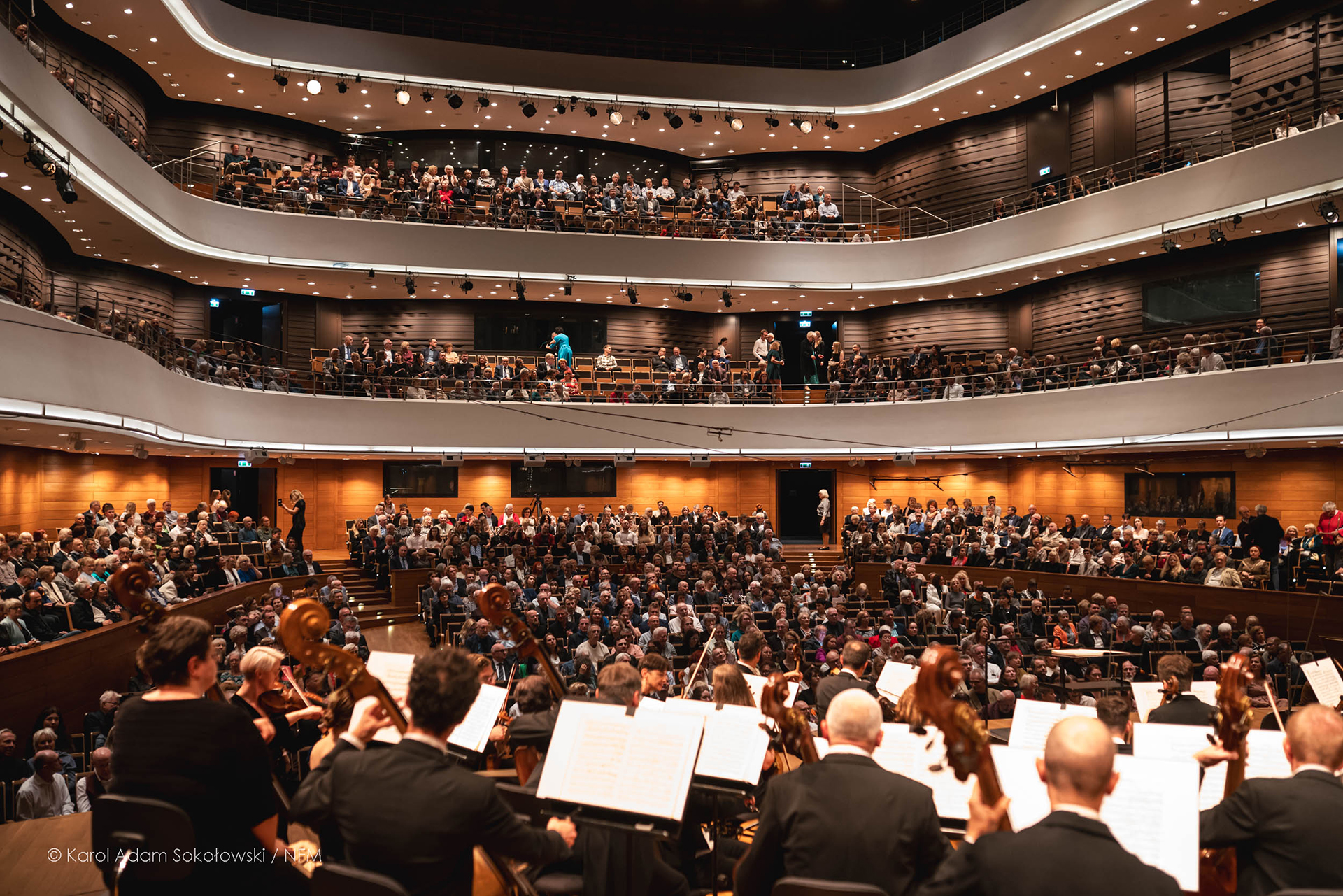
The NFM’s acoustics are regarded among the finest in Europe. Thanks to adjustable acoustic reflectors suspended above the stage, along with a system of curtains and panels, the sound can be adapted to any concert – reverberation lengthened or shortened as needed. The result is perfection for both Mozart and Mahler, for intimate chamber works and monumental oratorios alike. Background noise is virtually imperceptible, allowing every nuance to be heard: a choir’s whisper, a viola’s pizzicato, the breath of a soloist. Wooden wall and ceiling panels act as a resonating instrument body, dispersing sound evenly throughout the hall – ensuring that every listener, wherever seated, hears the same tone and dynamic balance.
As a cultural institution, the NFM was established in May 2014 through the merger of the Wratislavia Cantans International Festival and the Wrocław Philharmonic. The building also houses three smaller concert halls accommodating between 150 and 400 listeners. Engineers deliberately avoided right angles in the ventilation ducts to prevent air turbulence and unwanted noise – a small but crucial detail for pristine concert acoustics. Guided tours of the NFM offer a glimpse behind the scenes: through technical corridors, rehearsal rooms and backstage areas that the public rarely sees.
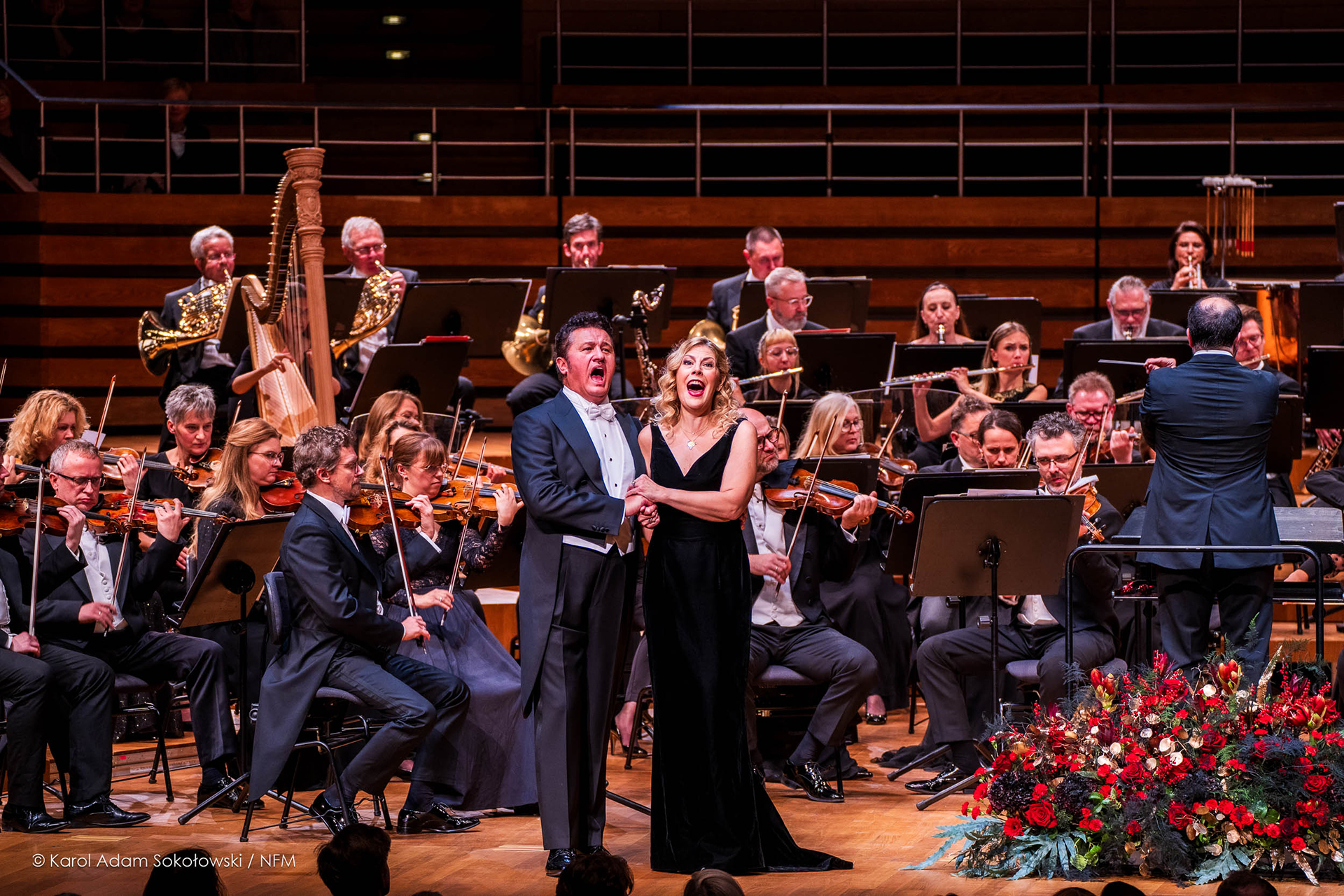
Last season, I had the pleasure of attending a concert featuring Piotr Beczała and Sondra Radvanovsky. The program included arias and duets by Puccini, Dvořák and Giordano. Both singers were in superb form – their solo and duet performances displayed the highest artistry. Their chemistry was almost tangible, fueling emotionally charged interpretations. The orchestra, conducted by Gianluca Marcianò, was also excellent, with a particularly moving rendition of the “Intermezzo” from Puccini’s “Manon Lescaut.”
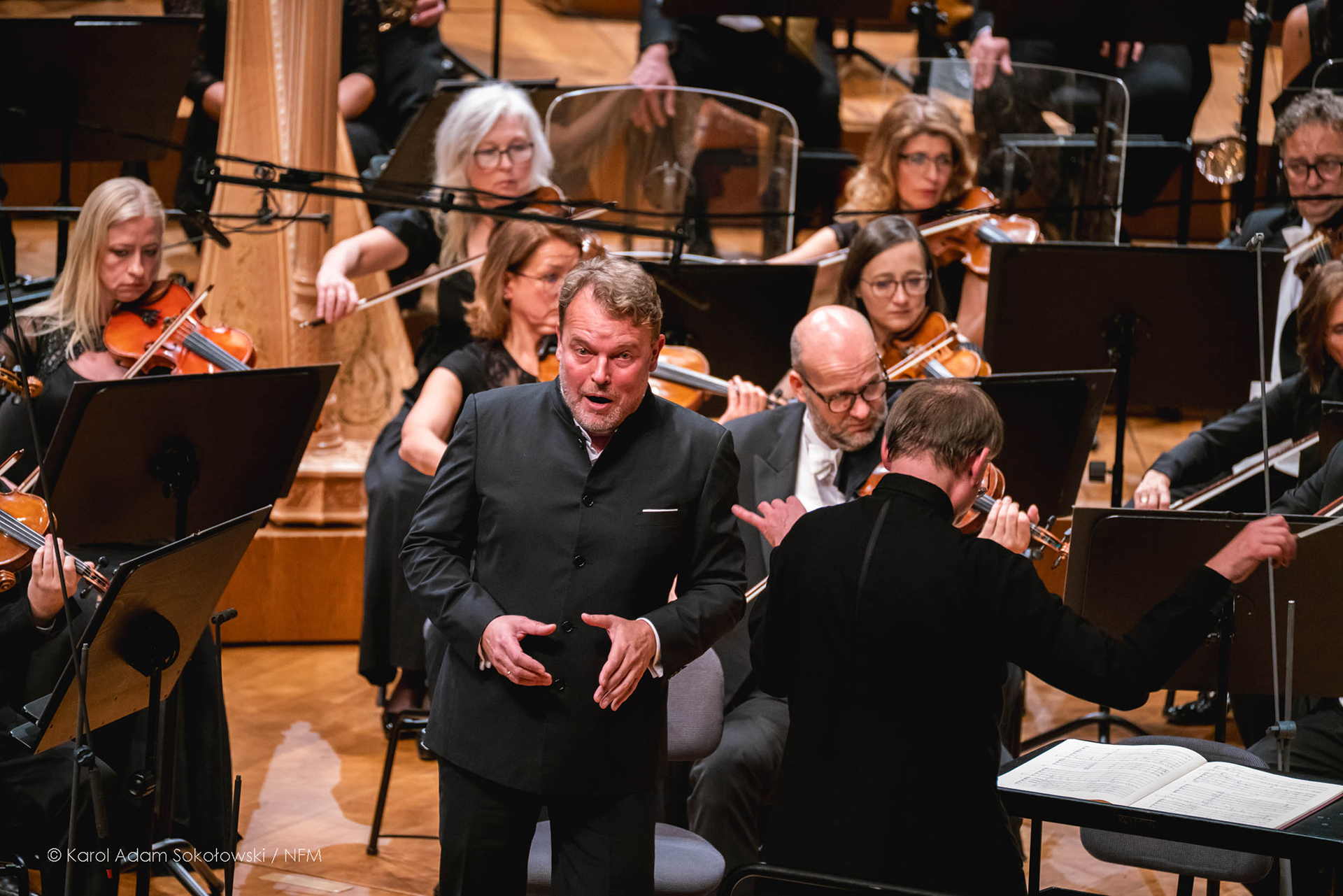
This season, I attended the Wratislavia Cantans Festival, where I experienced the third act of “Parsifal” – a remarkable performance that nearly didn’t take place due to Maestro Christoph Eschenbach’s illness. He was ably replaced by Robertas Šervenikas, who handled Wagner’s demanding score brilliantly. Nikolai Schukoff impressed in the title role, while Tomasz Konieczny and René Pape reaffirmed their deep affinity with the Wagnerian repertoire. The Kaunas State Choir, a long-time NFM collaborator, also performed superbly – precise, balanced, and full of tension, creating an almost monumental wall of sound in climactic moments. The concert ended with a ten-minute standing ovation.
The third concert was an opera gala featuring Jonathan Tetelman, once again with the orchestra under Gianluca Marcianò’s baton. It was my third time hearing Tetelman live – and by far the best. The artist has everything it takes to achieve major international success. His voice is a tenore spinto – dark-hued, rich and powerfully expressive. He sings with impressive breath control, broad phrasing and an open, ringing tone at the top of his range. Add to this his tall stature, commanding presence and acting skills, and it’s easy to see why Tetelman has been conquering major opera stages across Europe and the Americas in recent years.
The evening in Wrocław opened with French repertoire – arias from “Faust” and “Werther,” both sung with ease and brilliance. Tetelman doesn’t dwell on excessive nuance or subtlety, which is perhaps why he excels most in the Italian verismo repertoire, where his voice’s warmth and power shine brightest. He closed the first half with a commanding performance of Macduff’s aria from Verdi’s “Macbeth.” In the second half, he triumphed in arias from “Andrea Chénier,” “Cavalleria rusticana,” “Tosca” and “Turandot.” The audience responded with a standing ovation and cries of “bis!”, after which he offered two Neapolitan songs and, as a finale “Dein ist mein ganzes Herz” from Lehár’s “The Land of Smiles.”
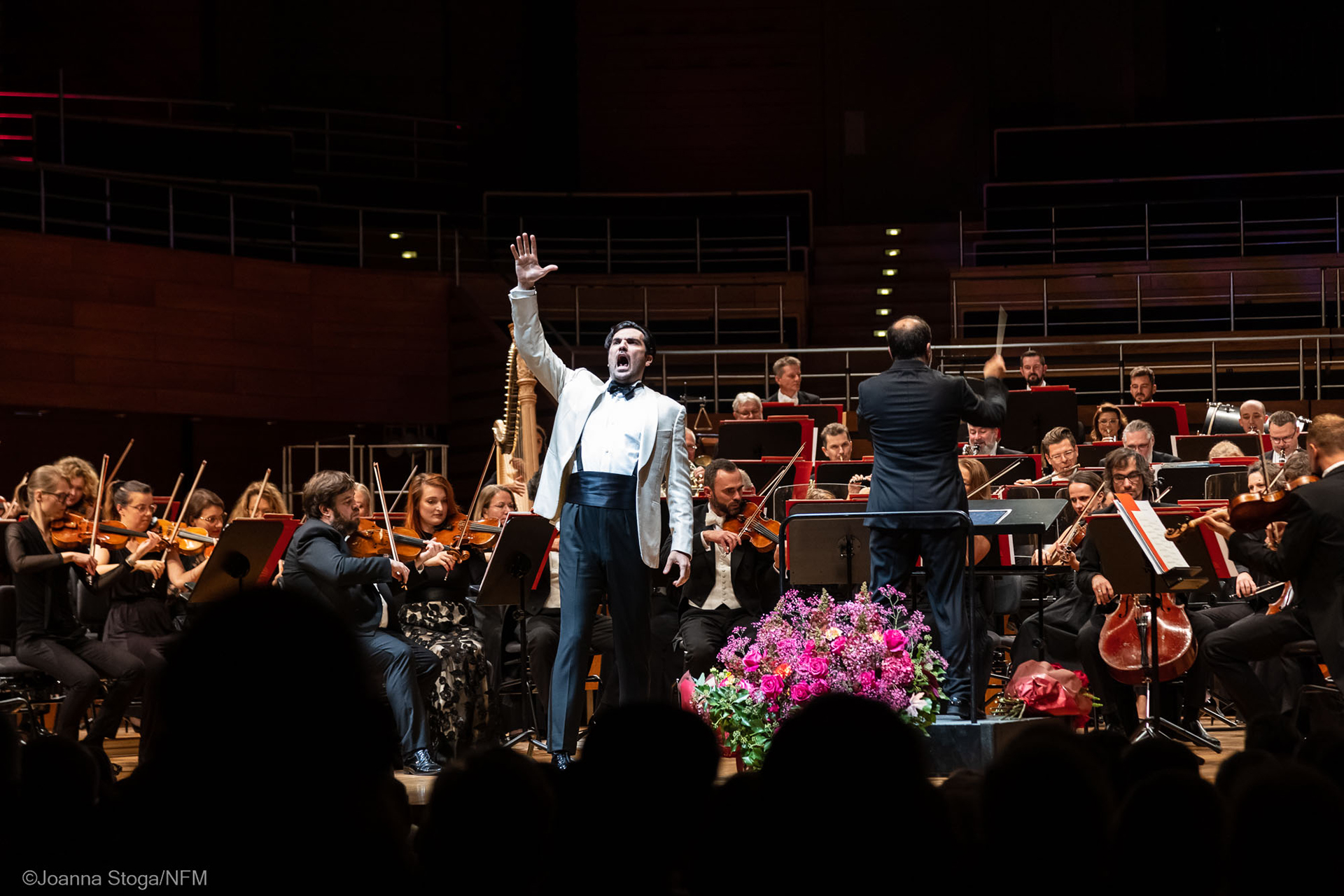
Tetelman is a superb showman, establishing instant rapport with the audience. He captivates not only with his voice but also with his effortlessly stylish, slightly nonchalant stage manner. During the concert, he changed outfits several times – from tails to a black jacket, and finally to a white dinner jacket. The Wrocław Philharmonic Orchestra played beautifully under the sensitive and assured direction of Maestro Marcianò, who proved an ideal partner for the singer. Particularly moving was the “Intermezzo” from “Cavalleria rusticana. I hope the Polish audience will have the pleasure of welcoming Tetelman to Poland many more times – not only in concert performances but also in full operatic productions.
Practical Tips for Visiting the NFM in Wrocław
Travel: Wrocław is increasingly well connected to the rest of Poland – easily accessible by train, car, or (once reopened) by air. From the main railway station, it’s about a 20-minute walk or a short tram ride (lines 4, 6, 7, 14, 15, 20) to the NFM.
Parking: There is an underground car park beneath the building (entrance from Krupnicza Street). It’s best to arrive early, as spaces fill quickly before major concerts.
Entrance: The main entrance is from Plac Wolności. Doors usually open one hour before the concert.
Cloakroom: Free of charge, located on level -1. Efficient service, though queues may form after large events.
Hotels: Numerous options in the vicinity – from budget to luxury (e.g. AC Hotel by Marriott, Hotel Monopol, The Bridge).
Café & Bar: The NFM Bistro (ground floor, facing the city moat and Plac Wolności) offers a good selection of snacks and drinks at reasonable prices. Additional “white” and “red” bars in the foyer operate before the concert and during intermission.
Surtitles: Displayed on both sides of the stage in Polish.
Dress code: Formal evening wear is not required, though opera and gala concerts are a wonderful opportunity to dress elegantly.